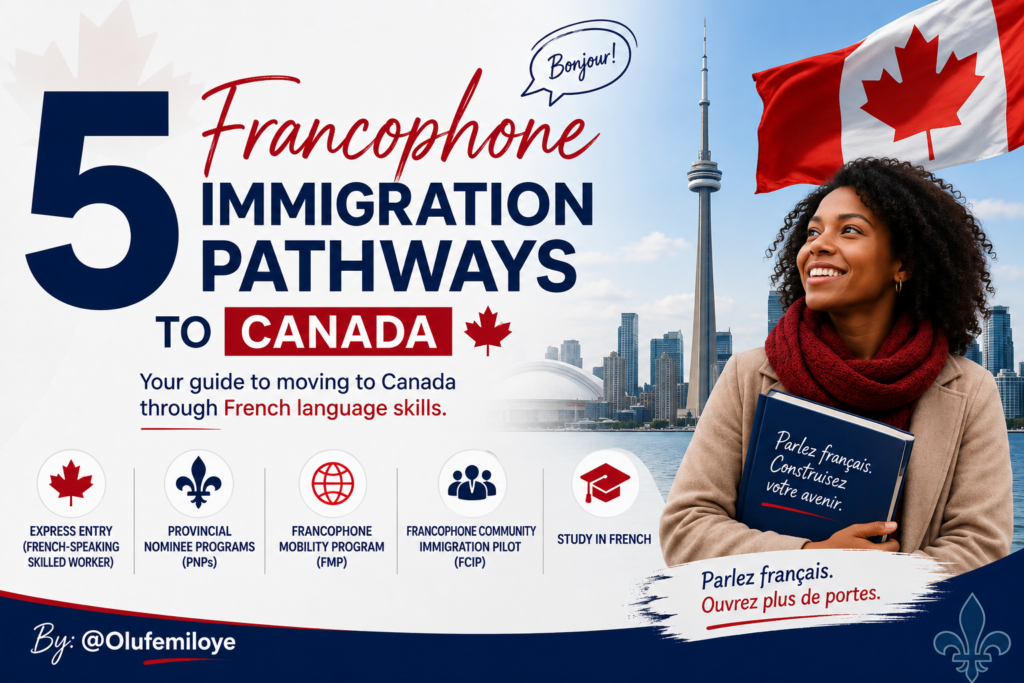
The Francophone immigration pathway is increasingly becoming a popular option for many candidates who want to move to Canada. But one thing many candidates do not know is that there are many options to explore.
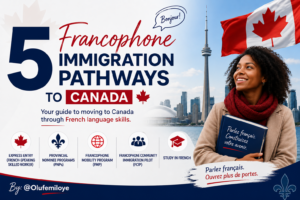
If you are learning French to move to Canada, or you are already a French speaker, these are 5 immigration options to explore.
Read. Bookmark. Share with others.
1) Provincial Nominee Programs:
There are 10 provinces and 3 territories in Canada, and you will find different types of nomination programs in almost all of them
What you need to be nominated for permanent residence in a province depends on the precise province and the nomination stream you are applying for. Do extensive research on this.
In many provinces, there are nominee programs that target French speakers or award additional points for French-language proficiency. The Canadian language benchmark required for this is also lower in most provinces.
Top provinces to check: New Brunswick, Ontario, and Manitoba…
Details available here and here.
2) Francophone Community Immigration Pilot (FCIP):
The FCIP offers permanent residence (PR) to skilled workers who want to work and settle in rural, remote Francophone communities in Canada.
Six (6) communities are currently eligible for this, and certain employers have been approved to hire for jobs that they cannot fill with local workers.
The major requirements for this program are having a CLB 5 French language test score and getting a job offer from a designated employer in one of the participating communities.
Details available here.
3) Francophone Mobility Program (FMP):
The Francophone Mobility work permit makes it easier for Canadian employers to hire without a labour market impact assessment (LMIA), if you meet certain requirements and you intend to live and work outside Quebec.
The required French language test for the program is NCLC level 5 (CLB 5). Good option, especially for those who need to apply for or extend their work permit in Canada. It grants your employer a waiver from getting an LMIA.
Details available here.
4) Francophone Minority Communities Student Pilot (FMCSP):
The FMCSP is a special study permit program for French speakers and citizens of 33 selected countries. Required living expenses for the FMCSP are lower compared to the regular study permit application process.
FMCSP applicants will also get settlement services during their studies, and options for permanent residence eligibility after they complete their program.
Details available here.
5) Express Entry – French Category:
For those who are unable to obtain the required work experience in one of the occupational categories of Express Entry, the French Express Entry category is your next option. For this, your work experience can remain in your profession (even if it is not one of the priority categories).
In the French language category, eligible candidates are invited based on their French language ability and must have a TEF or TCF score of up to CLB 7.
In addition to the language test, you also need at least one year of work experience (within the last 10 years) to create your Express Entry profile. This one year of experience can be from inside or outside Canada
In the first eight months of 2026, a total of 9 French-language draws were held, and 45,500 French-speaking candidates were invited to apply for permanent residence in Canada.
Details available here and here.
The opportunities of a lifetime must be seized in the lifetime of the opportunity. Key into these pathways when they are still available.
We are rooting for the success of your application!
If you have questions on Career & Personal Development, Global Opportunities, Personal Finance, or Building a Personal Brand, and want to reach out to us, check what we have here.
DISCLAIMER: The posts and information on this website are not legal advice. We are not Canadian Immigration Consultants and do NOT provide Canadian Visa Application Services. For any authorized Canadian Immigration information, services, or support, please check the Government of Canada website at www.canada.ca/immigration
© Olu of Canada